Between February 16-20, UBW facilitated several events that challenged students and faculty to create movements reflecting their emotions, experiences, and environments, while creating welcoming spaces for participants to experiment, meditate, and have fun dancing together.
By Lily Houston | St. Olaf College
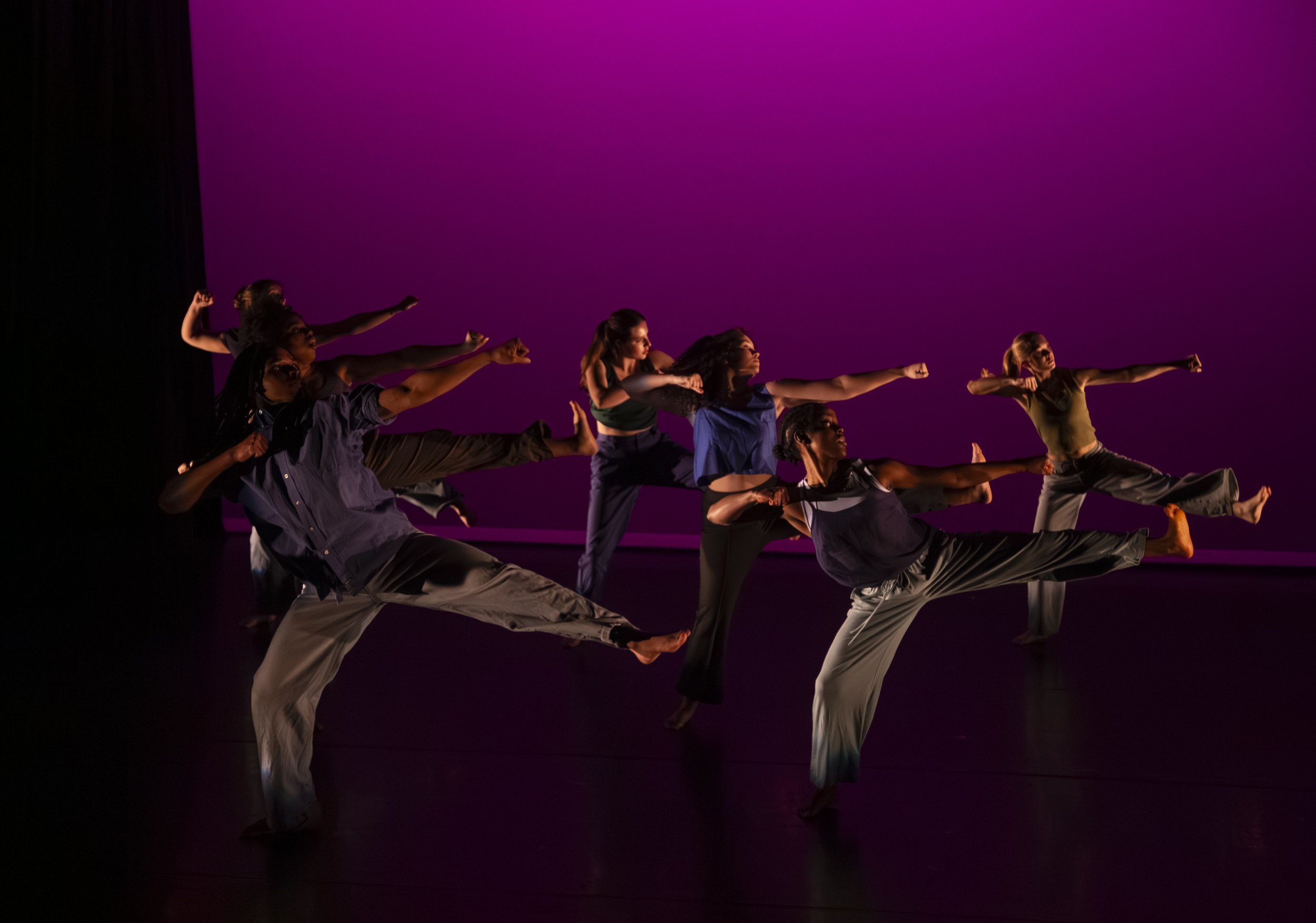
St. Olaf College students in The Work of We | Photo by Kari Mosel
In Studio 1 of the Center for Art and Dance, a group of dancers are hard at work— not dancing, but scribbling in notebooks. Facilitators from the Urban Bush Women (UBW) dance company have given them a writing prompt and five minutes to reflect and journal. After writing, the students pick random phrases from their entries, and use them as inspiration for an eight-count phrase, turning their memories into movement, and combining them with their classmates’ choreography to form a dance that illustrates where they are from.
This exercise kicked off the first session of the Collab Lab, one of several workshops that the UBW dance company led during their weeklong residency at St. Olaf College. Between February 16-20, UBW facilitated several events that challenged students and faculty to create movements reflecting their emotions, experiences, and environments, while creating welcoming spaces for participants to experiment, meditate, and have fun dancing together.
“Urban Bush Women’s work is really about getting to know the community that they are coming into, and supporting the things that emerge from within. I wanted our community to get to be a part of that process, and also have the students think about what they get through this process, and what their art does in the world beyond this.”
The BOLD facilitators for the St. Olaf residency were Courtney J. Cook, former associate artistic director at UBW, and Jaimé Yawa Dzandu, the learning and community manager for the BOLD network. While the company has always focused on contemporary dance theater and the African diaspora, its unique style is constantly evolving as new members and ideas join the company.
“If you follow the timeline of UBW, there will be a grounding aesthetic, but there will also be some nuanced differences, because it’s informed by the culture, movement, and experiences of who is in the company at the time,” Cook explains.
UBW prides itself on the example it sets for dance as a healing and changemaking practice, designing its choreography around social issues and cultural movements.
“Dance can be used to tell a story, a practice that can be healing,” Dzandu elaborates. “Dance allows our body to release our stress, clear our mind, and give voice to what we’re seeing. Dance is celebratory, and is also a form of resistance.”